
Nakiri Knife / Japanese Vegetable Knife

Discover how to use a traditional Nakiri knife(Japanese Vegetable Knife) with confidence and precision.
The Nakiri knives we carry are authentic, handcrafted, and 100% made in Japan.
If you want to know what is different of Nakiri knife and Santoku knife or different of Nakiri knife and Usuba knife. Explore our carefully curated selection and choose the best Nakiri knife for your kitchen.
Best Japanese Nakiri Knife
Best of
Japanese Nakiri Knives

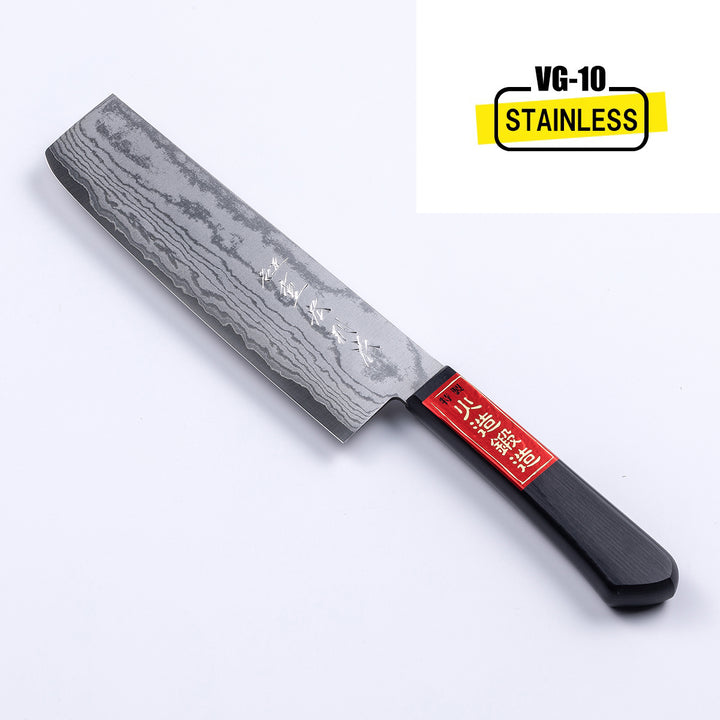


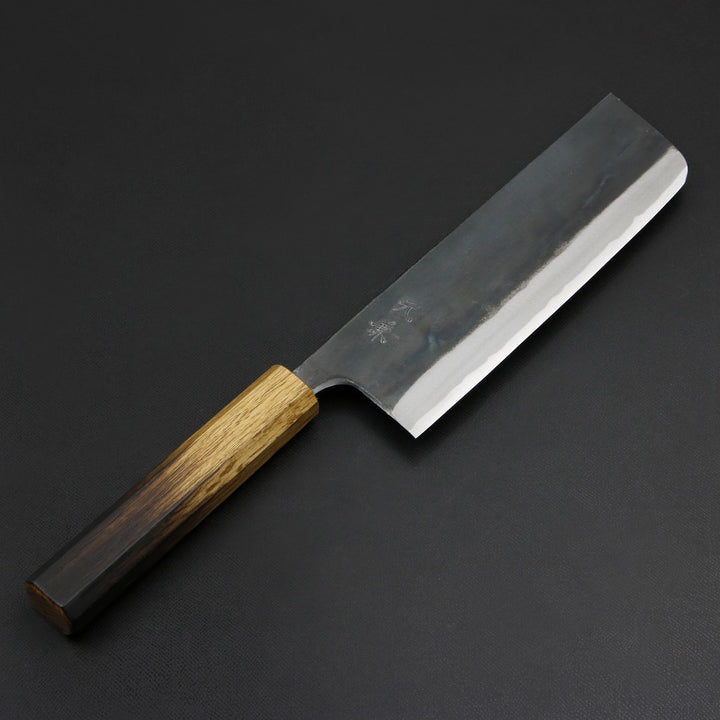

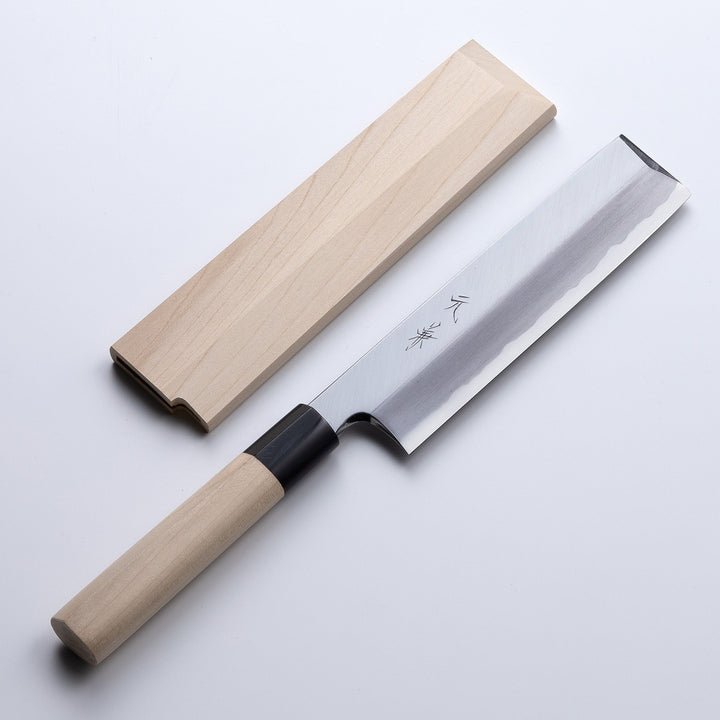
How to choose a Nakiri knife
The blade length of a Nakiri or Usuba knife is measured from the tip to the machi. The appropriate blade length is chosen based on the type of ingredients being prepared, as well as the size of the cutting board and kitchen space.
| Blade length | Purpose |
| 165~180mm | For Home |
| 180~210mm | For Professionals |
Nakiri knife vs Usuba

Nakiri Knife
A Nakiri knife has a straight blade, ideal for slicing vegetables cleanly.
It's double-edged, easy for both left- and right-handed users, and lightweight, reducing fatigue.
Great for fine slicing but not suited for meat or intricate decorative cuts.
Perfect for precise vegetable prep!
Click here for
Double-edged knives>>
Usuba Knife
A Usuba knife is a thin-bladed Japanese knife for precise vegetable cutting.
It's single-beveled, so left-handed users need a special version.
Steel blades are sharper but need care; stainless steel is easier to maintain.
Perfect for refining your knife skills.
Click here for
Single-edged knives>>
Q&A
Q: Nakiri Knife Use
A: A nakiri knife is designed specifically for vegetables. Its flat,
rectangular blade makes full contact with the cutting board, allowing clean, straight cuts without rocking.
Typical nakiri knife use includes cutting:
-Leafy vegetables (lettuce, cabbage, spinach)
-Root vegetables (carrot, daikon, potato)
-Soft vegetables (tomato, zucchini, eggplant)
-Herbs and small garnish ingredients
Because the blade is thin and straight, it slices through vegetables without crushing, keeping textures clean and reducing cell damage.
Q: Nakiri Knife Purpose
A: The purpose of a nakiri knife is to make vegetable prep fast, clean, and efficient.
Recommended ways to use a nakiri:
Push‑cut chopping (straight up‑and‑down motion).
Precision slicing for uniform vegetable cuts.
Mincing celery, onions, herbs.
Scooping chopped vegetables using the tall blade height.
Its lightweight design and simple cutting motion make it ideal for beginners
and professionals who want speed and consistency in vegetable preparation.
Q: Nakiri Knife Meaning
A: The word nakiri (菜切り) literally means “leaf cutter” in Japanese.
It refers to a traditional Japanese knife created specifically for cutting vegetables.
The blade shape—tall, flat, and square-ended—reflects this meaning and purpose.
Q: Nakiri Knife vs Chef's Knife / Santoku knife
A: A nakiri knife and a chef knife (gyuto) serve different roles in the kitchen.
| KINDS | Nakiri Knife | Chef Knife / Santoku Knife |
| Blade Shape | Flat, rectangular, blunt tip | Curved belly, pointed tip |
| Primary Use | Vegetables only | Multi‑purpose: meat, fish, vegetables |
| Cutting Motion | Push‑cut / straight chop | Rocking, slicing, chopping |
| Strengths | Fast, clean vegetable cuts | Versatile, handles all ingredients |
| Weaknesses | Not suitable for meat or detailed tip work | Less efficient for straight vegetable chopping |


